Over the past weekend I digitized about two dozen of the 78's that were newly added to my collection. Most of them came out sounding great. A couple of them were a little rough, but we're all used to some scratches and pops, right?
Look for songs by Glenn Miller, Les Brown, Benny Goodman, Vaughn Monroe and Tex Beneke. These will be released over the course of the next week on the YouTube Channel. Oh, and please don't forget to subscribe to the channel as well. I'm trying to reach 1000 subscribers by the end of the year. Just a silly personal goal I set for myself. :) Here's a direct link to the channel: Swing City Radio YouTube Channel
In this post I included a song called "Oklahoma City" by Tex Beneke. It was released on the RCA Victor label back in 1947. Tex sings about Oklahoma City, but it sounds more like he misses "making a bid for that freckled-face kid from Kalamazoo".
Enjoy!
Listen to: "Oklahoma City" by Tex Beneke from 1947
Yesterday I made some time to go out record hunting and got about fifty 78's. Spent most of last night cleaning a bunch of them up and I have to say, many of them cleaned up quite well. But, we'll see how they sound. It's weird how some of the cleaner ones in my collection can sound awful, while ones filled with scratches and faded label can sound beautiful. You just never know. I think that's what makes it so much fun.
I'll be posting the audio of these 78's to the YouTube Channel over the next few weeks so keep and eye out for that. I was able to rescue some Glenn Miller discs, a lot of Benny Goodman, Tex Beneke, Vaughn Monroe and many more.
In fact, I might digitize some of these tonight. Who knows, I'm sometimes easily distracted so we'll see if I get to it. 😜
Last week I added some more of my 78rpms to the Youtube Channel. Most of these came out sounding pretty good. You should have seen the original condition some of these were in. It's amazing that some of these sound as good as they do.
Included are tracks by Billy Butterfield, Van Alexander, Vaughn Monroe, Mal Hallett and Glenn Miller. I really LOVE the Van Alexender version of "The Jumpin' Jive" which I included with this post. It was released on the Bluebird Label in 1939. There is some surface noise when at the beginning which I couldn't get rid of but overall it's pretty good quality.
Violinist, Mal Hallett, trained and educated at the Boston Conservatory of Music. During World War I, Mal joined Al Moore's band and spent time in France entertaining the troops.
In the 1930's, Hallett would go on to lead his own band. His orchestra spent most of its time in the New England area but enjoyed a very nice level of success for a regional band.
When the Swing Era hit, Hallett was a bit older than most of the other swing leaders, and it's said that he sometimes had trouble connecting with the younger fans. It's also important to add that Hallett battled alcoholism throughout his career and the illness caused him to suffer an injury that prevented him from continuing to play the violin.
Hallett passed away in 1952, but he managed to leave behind a very strong catalog of Big Band music. His band will also be remembered for the amount of sidemen and vocalists that would go on to make an impact on the era including: Gene Krupa, Jack Teagarden, Frankie Carle, Jack Jenney, Toots Mondello, Irene Daye and many others. Let's just say that band was quite stacked with talent.
Unfortunately, I have only stumbled upon a handful of Radio Broadcasts and Transcriptions featuring Mal Hallett. As I find more, I'll be sure to add them to Swing City Radio and play them on the podcast.
Listen to: "Let's Get Lost" by Mal Hallett and His Orchestra from 1942
You can hear the music of Mal Hallett right here on Swing City Radio.
Hey everyone! I posted a new batch of 78's on YouTube today. Songs by Bunny Berigan, Harry James, Nellie Lutcher, The Pied Pipers and Gene Krupa. Very good stuff and most of them cleaned up nicely.
Included is a song called "Russian Lullaby" by Bunny Berigan And His Orchestra. It was a part of a 4 disc set that was originally released in 1942. Also, have a listen to Gene Krupa And His Orchestra's song called "I Know That You Know" This was released on the Brunswick Label in 1938.
Listen to: "Russian Lullaby" by Bunny Berigan And His Orchestra from 1942
Listen to: "I Know That You Know" by Gene Krupa And His Orchestra from 1938
If you'd like to listen to more 78's, here is the direct link to the YouTube playlist: Ronnaldo's 78rpm Collection.
During the last week of this October, I actually had some free time to clean up and digitize some of the 78's in my collection. I still have a milk crate worth of Shellac to work on, but I'm also hoping to get out to the record stores sometime in November. I miss those dusty, discount bins.
Here are two of my favorites that I cleaned up this month:
"Jersey Bounce" by Earl Hines from 1941
"Fralich In Swing" by Ziggy Elman from 1939. This later became a hit for Benny Goodman when Johnny Mercer added lyrics and the name was changes to "And The Angels Sing"
If you want to listen to more of my 78rpms click here.
I apologize that I haven't been able to upload videos to the channel at the rate I was achieving in the summer. But recently, I carved out some time and added some new vids. Also, I have another milk crate of 78rpm to digitize so you should see more of these videos released during the Fall months.
Here's a small sample of Shellac I recently posted:
Listen to: Johnny Long And His Orchestra – "How Are Things In Glocca Morra" from 1947.
Listen to: Benny Goodman And His Orchestra – "Perfidia"
Listen to: "Don Voorhees And His Earl Carroll Vanities Orchestra" – The Riff Song from 1929.
Many of you probably know by now that I've been spending some time transferring my growing collection of 78rpm recordings to MP3. I've been publicly sharing the music on The Swing City Radio Youtube Channel. Here's a direct link to the playlist: Ronnaldo's 78rpm Collection
Here's a couple that I've posted in mid-July:
"Love Me! Love Me! Love Me!" by Sammy Kaye
This was released in 1949 on the RCA Victor Label. It includes vocals by The Kaydets.
Listen to: "Love Me! Love Me! Love Me!" by Sammy Kaye from 1949.
Have YOU Subscribed to The Swing City Radio Youtube Channel yet? Click Here to Subscribe. It will take less than 30 seconds of your time and I would really appreciate it.
"Bolero At The Savoy" by Gene Krupa and His Orchestra
This great track by Krupa was recorded in New York, NY on November 25, 1941. It was originally released on the Okeh label. This is from the Columbia release from 1944 and features Anita O'Day on vocals.
Listen to: "Bolero At The Savoy" by Gene Krupa from 1944
The Casa Loma Orchestra was one of the top Dance Bands in the early to mid 1930's. The band was active from the late 1920's to 1947 and then re-emerged in 1957. The Casa Loma Orchestra had a few leaders over the years but the most notable was saxophonist, Glen Gray.
The band originally assembled under the name The Orange Blossoms in Detroit, Michigan. By the time of their first recordings in 1929, they had changed their name to The Casa Loma Orchestra.
The business model and structure of this band was much different than most others. Almost all other bands at this time had a "leader" for whom everyone worked. Casa Loma operated as a collective group. In 1930, the Casa Loma Orchestra was incorporated in New York with the members becoming owners, shareholders, and board members. The band members were hired on the grounds of musical competence and would have to follow a strict code of conduct and financial rules. Members who broke the rules could be summoned before the "board", have their contract bought out, and be ejected from the band.
Listen to: "Don't Get Around Much Anymore" performed by
Glen Gray and The Casa Loma Orchestra (1942).
This recording is from my personal collection of 78 recordings.
The band was led by a person that was hand-picked by the band itself. Casa Loma's first bandleader was violinist Hank Biagini. In 1937, the band overwhelmingly voted in favor of Glen Grey leading the orchestra, and Gray finally accepted the job.
The Casa Loma Orchestra released A LOT of music during their run in the 1930's and 40's. They scored a boatload of hits and enjoyed a long run on radio including extended stints on Camel Caravan.
After 1947, the Casa Loma band had ceased touring, and Glen Gray retired. The later recordings on Capitol Records, beginning with Casa Loma in Hi-Fi in 1956 and continuing through the Sounds of the Great Bands series, were done with Gray leading a group of studio musicians in Hollywood. Several of the Casa Loma alumni would occasionally be featured as well. In all, some 14 high-fidelity and stereo recordings were made for Capitol Records under the name of Glen Gray and the Casa Loma Orchestra before Gray's death in 1963.
... and speaking of Casa Loma alumni, a few of the names that passed through the band over the years included: Pee Wee Hunt, Sonny Dunham, Kenny Sargent and Horace Henderson. Keep in mind, the band maintained a stable collection of personnel that didn't change much because of the member ownership structure they had in place.
Listen to: "Come and Get It" performed by
Glen Gray and The Casa Loma Orchestra.
Interesting Note: In 1943, Eugenie Baird became "the first girl vocalist ever featured" with the Casa Loma Orchestra.
You can hear the many hits of The Casa Loma Orchestra right here on Swing City Radio.
Jan Savitt was born in a part of the old Russian Empire which is now a part of Ukraine. He moved to the United States with his family very early in life and grew up in Philadelphia, Pennsylvania. At an early age, it was quite apparent that Jan was a very good violinist. This caught the attention of Leopold Stokowski who led the Philadelphia Symphony Orchestra at the time. When Savitt finally joined on with the symphony he remained with them for a good part of seven years. Hence his nickname "The Stokowski of Swing".
But don't be fooled by Savitt's classical training. Jan Savitt really knew how to swing. In the late 1930's, he formed his own band and became one of the biggest swing acts in the Philadelphia area. He also received a lot of air time on the radio; for years his band, Jan Savitt and The Top Hatters, was the staff band on KYW radio in Philly.
Throughout the war years of the 1940's, Savitt's band released many recordings and made quite a name for themselves. Even after the war, the band continued to tour and enjoyed a good deal of popularity. While touring the west coast of the U.S. in October of 1948, Jan suffered from a cerebral hemorrhage before a show and was rushed to a local hospital. Savitt passed away two days later at the young age of 41. Such a shame.
Listen to "Green Goon Jive" by Jan Savitt from my 78's Collection.
You can hear many of Jan Savitt's songs right here on Swing City Radio.
Consider supporting Swing City Radio by becoming a Hepcat. Learn more at: SupportSwing.com.
This month, I decided to showcase a 78rpm from my collection featuring Doris Day and Harry James. This was originally a part of a 4 disc set called "Young Man with a Horn", but I found it at the bottom of a dusty pile, no sleeve, lost to time in a second-hand store. I cleaned up the shellac so we can enjoy this great music together. The two songs I've included are: "The Very Thought Of You" written by Ray Noble and an instrumental called "Melancholy Rhapsody".
Listen to: "The Very Thought Of You" by Doris Day and Harry James from 1950
"Young Man with a Horn" was an album that was released by Columbia Records in March of 1950 featuring trumpeter Harry James and vocalist Doris Day performing songs recorded for the soundtrack of the film "Young Man with a Horn".
The film was loosely based on the life of Bix Beiderbecke. The soundtrack was played by Harry James and His orchestra. Doris Day, who appears in the film as well, provided the lead vocals on many of the album's tracks.
Listen to: "Melancholy Rhapsody" by Harry James and His Orchestra from 1950
As I wade through the archives of old radio performances and recordings from the 1940's, a name that pops up from time to time is a vocalist named Betty Bonney. After singing with various regional bands, Bonney joined Les Brown's Orchestra in 1941. She sang in the band's first major hit "Joltin’ Joe DiMaggio.” Bonney recorded and toured with Les Brown until August of 1942 and then left the band to get married.
She returned in early 1943 as a featured vocalist in Jan Savitt's Orchestra. This became the start of a carousel ride that would see Bonney sing for a bunch of major bands in a short amount of time. During the years of 1943 through 1945, Bonney sang in the bands of Jan Savitt, Jerry Wald, Frankie Carle and Charlie Spivak.
Listen to: "I Got It Bad And That Ain't Good" by Les Brown
Throughout the rest of the decade Bonney appeared on Broadway, had a stint in Hollywood and did quite well in the nightclub circuit. She also ended up doing a number of Soundies as well.
In 1950, after changing her name to Judy Johnson, she briefly joined Sammy Kaye's band. She eventually made a move to television where she made many appearances on shows like "Arthur Murray's Dance Party" and "Your Show of Shows".
You can hear the voice of Betty Bonney featured with many different bands right here on Swing City Radio.
Jimmie Lunceford was born in Mississippi but spent the majority of his childhood in Denver, Colorado. He grew up learning how to play a variety of instruments, but the alto saxophone became Lunceford's instrument of choice.
He led a popular and influential band from 1929 until his untimely death in 1947. Lunceford's Orchestra made their first recordings in 1930 and toured throughout the early part of the decade. In 1934, the band accepted a booking at the Harlem nightclub "The Cotton Club." This is where Lunceford's reputation began to take-off. The band's tight musicianship and the often outrageous humor in their music and lyrics, Lunceford's orchestra made an ideal band for the club. Lunceford's stage shows often included costumes, skits, and obvious jabs at mainstream white bands.
Jimmie Lunceford and His Orchestra were responsible for many hits in the mid to late 30's including the songs: "Wham (Re-Bop-Boom-Bam)", "Lunceford Special", "For Dancers Only", "Uptown Blues" and "Stratosphere" to name just a handful.
Even though Lunceford released some very good music in the 1940's, his band was in decline because he was constantly losing talented sidemen to better paying bands. Lunceford sadly passed away in July of 1947 at the age of 45. There has since been many rumors and allegations that Lunceford had been poisoned.
Listen to: "Blues In The Night" by Jimmie Lunceford (1942)
from my personal collection of Shellac 78's.
You can hear the music of Jimmie Lunceford right here on Swing City Radio.
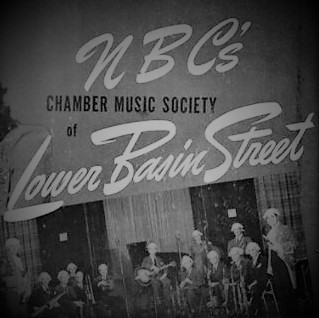
The Chamber Music Society of Lower Basin Street was a fantastic show that first appeared on NBC's Blue Network in February of 1940. The show ran until 1944 and some of it's later episodes were also carried by Armed Forces Radio Services (AFRS). The show was rebooted in the 1950's, but in my opinion, lacked the appeal of the first run.
Last week, I spent a considerable amount of time "mining" the series: identifying, isolating, and cleaning up the audio of select tracks to add to the Swing City Radio Playlist. And I have to say, I feel that I've uncovered some true gems that I'm sure you will really enjoy, over 50 different tracks. So be sure to listen for them on the station.
As I wrote above, the show itself was fantastic. "The Chamber Music Society of Lower Basin Street" was a satire of those old, stuffy, highbrow symphonic broadcasts that were so popular on 1930's radio. The show featured Dixieland, Swing, Jazz and Blues music but introduced it in a comedic manner mimicking the dry, snobby way similar to those Classical Music Shows. It was hosted by Gene Hamilton. I rarely ever say this, but I enjoyed Hamilton's introductions just as much as the music itself.
"The Chamber Music Society of Lower Basin Street" featured two house bands which were both excellent. Henry "Hot Lips" Levine, a former member of the Original Dixieland Jazz Band, led an eight-member combo that handled the Dixieland songs and Paul Laval (who later changed the spelling to Lavalle) led a band that would perform the more swing based material. Both of these bands were tight and talented and many of their show performances have been added to Swing City Radio.
The beautiful voice of Dinah Shore was discovered on this program. Some other vocalists featured were Delores O'Neill, Diane Courtney and Linda Keene. I was also able to capture some very good guest appearances by Erskine Hawkins, Lionel Hampton, John Kirby and Toots Mondello. The John Kirby appearance was especially good which included a great rendition of "Close Shave".
I plan on playing select tracks from this show on The Big Band and Swing Podcast in April, but until then, enjoy these classic Dixieland, Swing and Blues performances on Swing City Radio.
Here are two sides I have in my personal 78rpm Collection for you to enjoy:
The Dixieland Jazz Group Of NBC's Chamber Music Society
Of Lower Basin Street performing East St. Louis Blues from 1941.
The Dixieland Jazz Group Of NBC's Chamber Music Society
Of Lower Basin Street performing Aunt Hagar's Blues from 1941.
Johnnie Davis is more remembered for his work in Hollywood. He appeared in over a dozen films including "The Varsity Show", "Hollywood Hotel" and "Cowboy From Brooklyn". His success as an actor was a direct result of the attention he received while in the music industry.
Davis was a singer, trumpeter and led a band of his own for a brief time. While still in high school, Davis worked as a musician in the bands of Paul Johnson and Leo Baxter. It was also at this time that Davis Discovered and developed his skills as a scat singer. Hence the nickname, Johnnie "Scat" Davis. In the mid 1930's, he worked with Fred Waring as a musician and vocalist, and his success during this time led him to Hollywood.
In 1937, he appeared in the movie "Hollywood Hotel", where he introduced the Johnny Mercer song "Hooray for Hollywood". His lively rendition became extremely popular and became closely associated with the film industry. Note that on the 78's below, he is credited as "Johnny". I've found that he was listed as both "Johnnie" and "Johnny" throughout his career.
Listen to: "Hip Hip Hooray" (1942) by Johnny "Scat" Davis And His Orchestra from my 78rpm Collection.
On the other side of this fine piece of shellac is his version of "White Christmas". There's nothing like listening to a good Christmas Song when the weather is warm outside.
Listen to: "White Christmas" (1942) by Johnny "Scat" Davis And His Orchestra
from my 78rpm Collection.
Remember, I have a boatload of 78 recordings that I've posted on the Swing City Radio YouTube channel. Check it out.
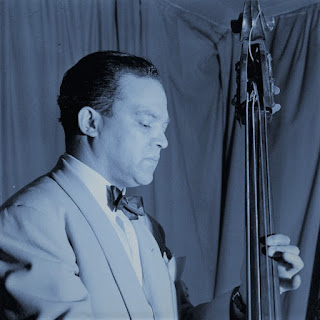
John Kirby led a successful band in the late 1930's - early 40's, and was a fantastic double-bassist. He also played trombone and tuba.
Kirby began his career in the late 1920's and by 1930, he landed a spot in Fletcher Henderson's great band as a tuba player. As the tuba fell out of favor as a popular instrument, Kirby switched over to double-bass and later played in the bands of Chick Webb and Lucky Millinder.
In 1937, Kirby put together a sextet that later became known as The Onyx Club Boys and was promoted as "The Biggest Little Band in the Land". Kirby and the band were famous for their Chamber Jazz style, which was a lighter, Classical influenced style of Jazz. They scored a few hits including "Loch Lomond" and "Undecided".
Listen to: "Tweed Me" by John Kirby from my 78's Collection.
The most prominent vocalist for John Kirby's band was Maxine Sullivan, who later became Kirby's second wife. As Kirby's career declined in the late 1940's, he drank heavily which led to an issue with diabetes.
Listen to: "Loch Lomond" by John Kirby with Maxine Sullivan on vocals.
Kirby planned a comeback in the early 1950's but died at the young age of 43.
You can hear the music of John Kirby right here on Swing City Radio.
Consider supporting Swing City Radio by becoming a Hepcat. Learn more at: SupportSwing.com.
The Ink Spots were a Vocal group who gained world wide fame in the 1930s and 1940s. They had a unique musical style and landed over 30 hits on the US Pop Charts with 18 of them on the top 10 during the 1940's.
The Ink Spots formed in 1934 in Indianapolis. The original line-up included Charlie Fuqua, Deek Watson, Jerry Daniels and Orville Jones. They achieved so initial success when touring the United Kingdom with Jack Hylton's Orchestra. Their early record releases were not commercially successful but they were steadily gaining a following.
In 1936, Daniels was replaced by Bill Kenny. When Kenny added his unusual high tenor ballad singing style with the rest of The Ink Spots, the result was almost magical. This was when things really started to happen for the vocal group and this lineup is considered by most to be their "classic" lineup.
In January of 1939, the band recorded "If I Didn't Care." This ballad became one of their biggest hits and has sold over 19 million copies through the years. It was also their first of many, many recordings to reach the US Pop Charts.
Listen to: "The Gypsy" by The Ink Spots from my 78rpm Collection.
In 1943, singer and guitarist Fuqua was drafted into the US Army and Jones died in October of 1944, after collapsing on stage in New York City. This started a merry-go-round of line-up changes within the band that lasted until their break up in 1954.
An interesting note: Since the Ink Spots broke up in 1954, there have been over 100 vocal groups calling themselves "The Ink Spots" without any rights to the name, and without any original members of the group. These groups often have claimed to be "2nd generation" or "3rd generation" Ink Spots.
You can hear many of The Ink Spots ballads right here on Swing City Radio.
Red Norvo was known as Mr. Swing and enjoyed a musical career that spanned over six decades. Along with Lionel Hampton, Red helped establish the xylophone, marimba, and vibraphone as jazz instruments.
Norvo began his career in Chicago, IL in the mid 1920's playing for the famous "Collegians" in 1925. Throughout the 1930's and 40's, Red played in the orchestras of Benny Goodman, Paul Whiteman, Charlie Barnet and Woody Herman. He also led his own band at times, which proved very successful.
In 1933, Norvo married vocalist Mildred Bailey, and they soon became known as Mr. and Mrs. Swing. The marriage lasted almost ten years and even after their divorce in 1942, the two remained friends and continued to record together.
During the height of his career, Norvo also recorded tracks with Frank Sinatra, Billie Holiday, Dinah Shore, Dean Martin and many others. He landed a bunch of charted hits and also managed to appear in a handful of films.
Listen to: "Please Be Kind" by Red Norvo with Mildred Bailey on vocals recorded in 1938
from my personal 78rpm Collection.
You can hear the music of Red Norvo right here on Swing City Radio.
Bob Strong is not a name that most remember from the Big Band Era. The majority of his body of work came as a staff musical director for a few radio shows but he did manage to assemble a pretty good touring band to take out on the road in the mid 1940's.
Strong got his start in Chicago as a sideman in the orchestras of Paul Ash and Jean Goldkette in the 1920's. He was an accomplished musician on every instrument in the reed family and could also play oboe, violin and mellophone. A very talented guy!
He eventually made a home for himself working in Chicago radio market and this led to him being one of the busiest staff music directors in the Midwest. Two of the biggest shows he worked on were The Buddy Clark Show and The Red Skelton "Avalon Time" Show.
During the mid 40's, Strong took his band on the road and they played all the main spots, including gigs at the Glen Island Casino and the Roseland Ballroom. Bob Strong and His Orchestra also spent a good amount of time performing for troops and war workers all over the United States.
Largely due to The Musicians' Strike of 1942-44, only a small amount of Strong's work made it onto shellac. Below, I included a track that I transferred from my 78rpm Collection. There's also a few others to listen to on my Youtube Channel here.
Bob Strong passed away in March of 1976.
Listen to: "Come Out, Come Out Wherever You Are" by Bob Strong from 1944.
Hey there everyone! I just wanted to let you know that I've added a new section to the Swing City Radio Youtube Channel called "Ronnaldo's 78rpm Collection".
As of the moment, I only have a handful of videos posted in the section, but I will be adding a lot more in the future. This will provide me a way to feature all the great music I find on my record hunting quests. Some of these records are in horrible shape when I find them, and I take great pleasure in cleaning them up and digitizing them. And now I get a chance to share them with you. Snaps, pops, clicks and static included. I do what I can to clean up the audio, but I do so while keeping the integrity of the recording in mind.
Listen to: "You Stepped Out Of A Dream" by Glenn Miller
Today's post includes a Glenn Miller Shellac 78 from 1941 released on the famous Bluebird label. On Side A we find a song called "You Stepped Out Of A Dream" featuring Ray Eberle and The Modernaires on vocals. Side B contains the track "Ring, Telephone Ring". Not the most popular recordings released by Miller, but these are the tracks I see myself focusing on in these posts. The songs that are sometimes forgotten. 😀
Listen to: "Ring, Telephone Ring" by Glenn Miller
This 78 was found on the floor, covered with dust and grime in a local record store. Let's just say it was in some dire need of love. The audio, of course, is nowhere near CD quality. But that's the beauty of it. Enjoy! ...and don't forget to Subscribe to my Youtube Channel to listen to more of these great 78's as I add them.




.jpg "Cleaning Up Some 78's")